
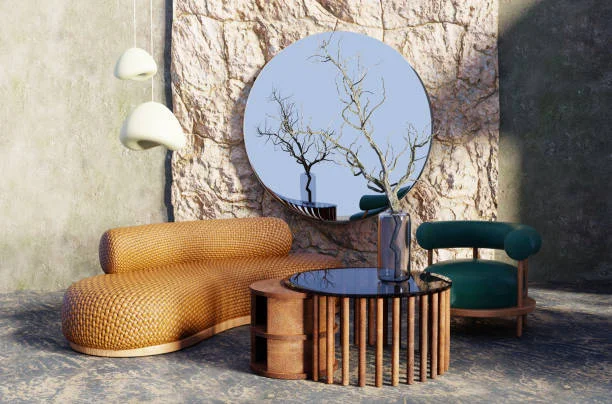
Furniture used to be silent. A table stood where it was placed. A chair accepted weight and nothing more. A cabinet held objects and aged slowly Furniture Design. For centuries, materials like wood, metal, and later plastic defined what furniture could do. They were stable, predictable, and passive. That stability shaped how homes were designed and how people lived inside them.
Today, that relationship is breaking down. Homes are smaller, denser, and more multifunctional. A single room may serve as an office, dining area, gym, and sleeping space within the same day. Static furniture struggles in this environment. It takes up space even when unused. It wears unevenly. It forces people to adapt their habits to its limitations rather than the other way around.
Futuristic furniture materials are not about unusual shapes or glossy finishes. They are about behaviour. A material that bends under load but returns to form changes how seating works. A surface that manages heat alters comfort without adding bulk. A structure that stays strong while becoming lighter changes how often furniture moves, reconfigures, or disappears entirely.
Traditional materials reach their limits quickly in modern living. Solid wood is heavy and sensitive to humidity. Steel is strong but unforgiving and energy intensive to shape. Plastics are light but degrade, creep under load, and age poorly in visible applications. These materials still matter, but they no longer solve the full problem of contemporary living.
Urban density accelerates this shift. Smaller apartments make weight, thickness, and modularity critical. Remote work adds long hours of sitting, demanding materials that respond to posture rather than simply resist it. Frequent relocation makes durability under repeated assembly more important than decorative longevity.
The idea of adaptive furniture follows naturally. Instead of replacing a sofa because its cushions sag, the material itself compensates. Instead of buying multiple pieces for different uses, one structure shifts its properties. This is not a design trick. It is a material decision.
Material science now sits alongside form and aesthetics as a core driver of furniture design. Designers increasingly start by asking what the material can do over time, not just how it looks on day one. That change marks the true beginning of futuristic furniture.
Engineered Composites That Act Like Living Structures
Engineered composites entered furniture quietly, often borrowed from aerospace, automotive, and construction industries. These materials combine fibres Furniture Design and resins to create structures that are stronger than wood, lighter than metal, and far more controllable in behaviour.
Carbon-based composites are the most visible example. Known for their use in aircraft and racing vehicles, they offer extreme stiffness at very low weight. In furniture, this allows frames that appear impossibly thin while supporting significant loads. Chairs no longer need bulky legs. Tables span wider distances without central supports. Shelving floats without visible reinforcement.
Glass-fibre and basalt-fibre composites offer similar benefits at lower cost. Basalt fibres, derived from volcanic rock, provide high strength and thermal stability with less environmental impact than carbon. When used in furniture frames, they resist fatigue and vibration better than metals. This matters in seating, where repeated micro-movements cause traditional joints to loosen over time.
Honeycomb cores and sandwich panels push the idea further. These structures place a lightweight core between rigid skins, creating stiffness without mass. The result is furniture that feels solid but weighs a fraction of traditional builds. Large desks become movable by one person. Wall-mounted units stress buildings less. Shipping volumes shrink dramatically.
These materials change how furniture is transported and assembled. Flat-pack designs become stronger, not weaker. Components snap or bond rather than relying on screws that loosen. Assembly errors matter less because the material distributes stress evenly.
Trade-offs remain. Composites are harder to repair visibly. Surface damage can require replacement rather than sanding. Costs are higher upfront, though often offset by longevity. Recycling remains complex, especially when fibres and resins are permanently bonded.
Still, these materials behave less like dead matter and more like engineered organisms. They flex where needed, resist where required, and recover from stress Furniture Design without permanent damage. That behaviour reshapes expectations of what furniture should tolerate in daily life.
Smart Materials That React to You
Some futuristic materials do not just support weight or resist wear. They respond. These smart materials change properties based on temperature, pressure, light, or movement, turning furniture into an interactive system rather than a static object.
Shape-memory alloys are one example. These metals deform under force but return to a programmed shape when conditions change. In seating, they allow supports that adjust under body weight and slowly recover when unloaded. Unlike foam, they do not permanently compress. Unlike springs, they distribute pressure evenly across the surface.
Polymers with shape-memory behaviour extend this idea further. They can soften with body heat and firm up as temperature drops. This allows cushions that adapt to individual users without mechanical adjustment. Over time, the furniture feels consistent rather than gradually collapsing.
Phase-change materials address another problem, temperature. These substances absorb and release heat as they shift between solid and liquid states. Integrated into upholstery or internal layers, they reduce heat buildup during long sitting periods. The result is less sweating and more stable comfort without fans or electronics.
Pressure-responsive surfaces use embedded sensors or conductive layers to detect load distribution. In advanced applications, they guide posture correction or adjust internal supports automatically. In simpler forms, they provide feedback to designers about how furniture is actually used over months or years.
Color-changing and light-diffusing materials push into visual territory. Surfaces respond to light intensity or touch, shifting tone subtly. Used carefully, this can improve spatial awareness or signal wear patterns. Used poorly, it becomes a novelty with no lasting value.
The line between usefulness and gimmick is thin. Smart materials add value when they reduce physical strain, extend lifespan, or simplify living Furniture Design. They fail when they distract, require constant calibration, or break without clear benefit. The most successful applications disappear into daily use, noticed only when absent.
Bio-Grown and Lab-Created Materials
A different branch of futurism rejects heavy engineering entirely. Instead of shaping materials through force and heat, it grows them. Bio-grown furniture materials rely on biological processes to create structure, texture, and strength.
Mycelium, the root network of fungi, is the most discussed example. When grown in controlled molds, it forms dense, lightweight structures. Once dried and treated, it becomes rigid, fire-resistant, and acoustically absorbent. In furniture, it works well for panels, shells, and internal cores.
Bacterial cellulose offers another approach. Produced through fermentation, it forms strong, flexible sheets with fine fibre structure. It can replace leather in upholstery without animal inputs. Its texture feels organic rather than synthetic, and it ages differently than plastics.
Lab-grown leather alternatives go further by culturing collagen directly. These materials aim to replicate the strength and feel of leather while allowing thickness, grain, and elasticity to be tuned. For furniture, this means upholstery designed for specific stress patterns rather than generic hides.
Algae-based foams and panels explore rapid growth cycles. Algae grow faster than trees and require minimal land. Processed into foams, they provide cushioning with lower environmental cost. As panels, they offer lightweight rigidity with natural fire resistance.
Growth-based materials challenge traditional factories. Production looks more like agriculture than manufacturing. Time replaces energy as the main input. Shapes are defined by molds rather than machining. Waste becomes feedstock.
Limits remain. Durability under heavy use is still being tested. Hygiene standards vary by application. Moisture sensitivity requires careful sealing. Adoption is fastest in low-load furniture and interior elements, slower in structural seating.
Still, these materials change the narrative. Furniture no longer has to be extracted, refined, and discarded. It can be cultivated, repaired biologically, and returned to natural cycles.
Ultra-Recycled and Circular Materials
Recycling used to mean compromise. Recycled furniture looked rougher or Furniture Design, felt weaker, and aged faster. That assumption no longer holds. Advances in processing and design have turned waste into a primary resource rather than a secondary option.
Ocean plastics and industrial waste streams now feed high-quality furniture components. When sorted and compounded correctly, recycled polymers achieve consistency close to virgin materials. In some cases, fibre reinforcement improves strength beyond original properties.
Recycled aluminium plays a major role. Aluminium can be recycled repeatedly without losing structural integrity. Furniture frames made from closed-loop aluminium systems retain precision while reducing energy use dramatically. Surface finishes improve with each cycle as impurities are better controlled.
Composite recycling remains challenging. Separating fibres from resins is complex. New approaches focus on thermoplastic composites that can be reheated and reshaped. This allows damaged components to be reprocessed rather than discarded.
Circular materials change design thinking from the start. Furniture is designed to be disassembled. Materials are chosen for compatibility rather than appearance alone. Fasteners are visible and accessible. Surfaces accept refinishing rather than replacement.
The difference between marketing sustainability and structural sustainability becomes clear here. A recycled label means little if the product cannot be repaired or reprocessed again. True circular furniture plans its second and third life before the first sale.
In public spaces, this approach reshapes expectations. Items like restaurant chairs increasingly rely on recycled metals and polymers not as a statement, but because they survive heavy use and repeated refurbishment better than traditional builds.
What These Materials Mean for How We Live
The impact of futuristic furniture materials extends beyond design studios. It quietly reshapes daily habits. Lighter furniture encourages movement. Rooms change function more often. Rearranging no longer feels like a project.
Longer product lifecycles alter emotional attachment. Furniture that adapts and recovers stays relevant longer. People repair instead of replace. Wear becomes manageable rather than terminal.
Modularity becomes normal. Parts are upgraded individually. A seat surface changes while the frame remains. A panel swaps function without discarding structure. Ownership shifts from fixed objects to evolving systems.
Pricing changes as well. Upfront costs rise, but replacement cycles slow. Furniture becomes closer to equipment than decoration. Leasing, upgrading, and resale markets grow naturally around durable cores.
Ten years from now, many of these materials will feel ordinary. Homes will contain fewer objects, each doing more. Furniture will respond quietly to bodies, space, and time. The future will not look dramatic. It will feel easier to live in.